Security-Cut Labels
Paper labels can be manufactured with cuts or slits that encourage tearing when removal is attempted. A suitable adhesive helps the label bond so the cut pattern can do its job.
See Our Holiday Hours


Make opening or removal easier to notice.
Help customers and staff check package closures with custom tamper-evident labels. BarcodeFactory can help you compare security cuts, destructible materials and VOID-pattern constructions for your packaging and handling conditions.
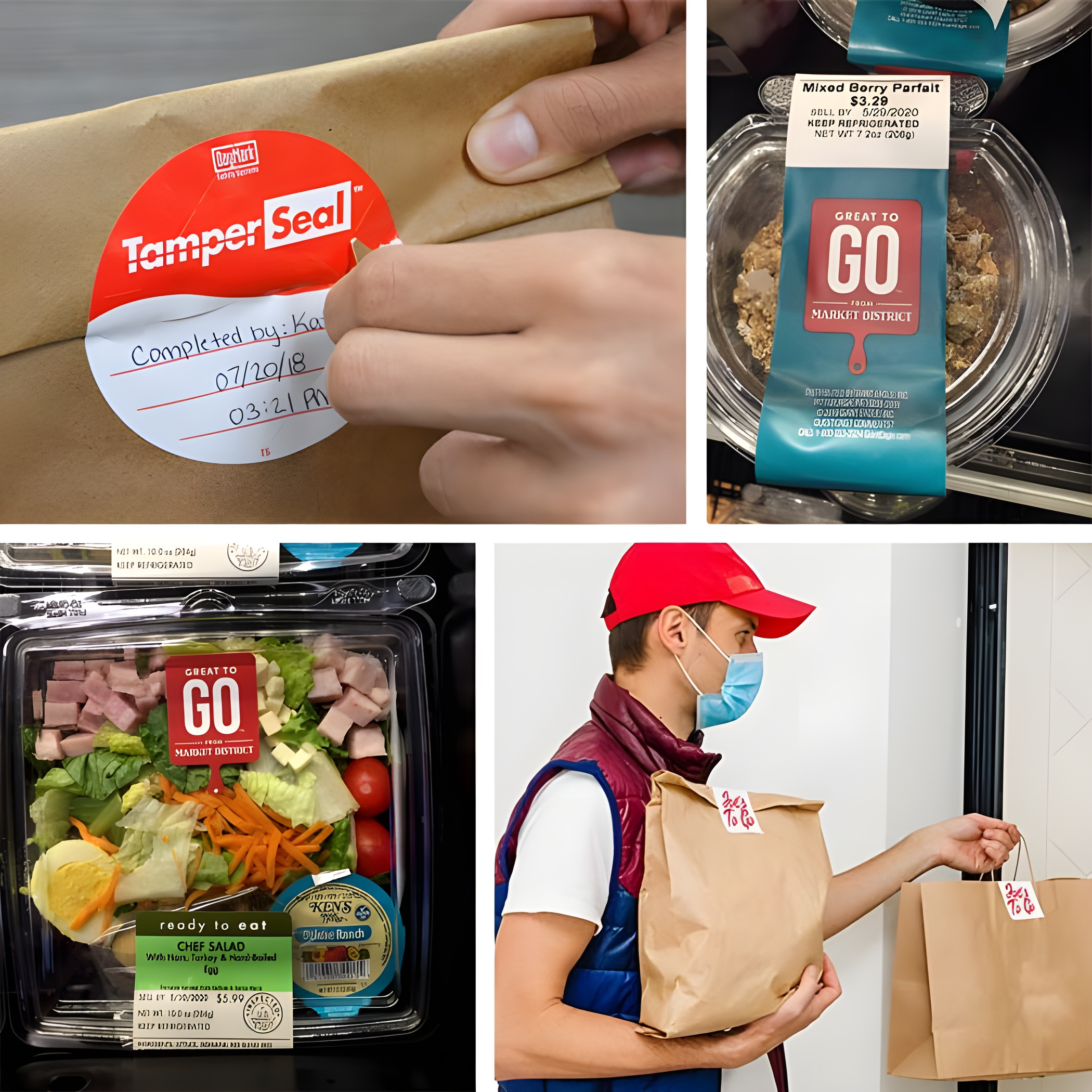
The visible response depends on the label material, adhesive, package surface and application conditions. Review how each option performs on your packaging before ordering.
Paper labels can be manufactured with cuts or slits that encourage tearing when removal is attempted. A suitable adhesive helps the label bond so the cut pattern can do its job.
Destructible materials are designed to break into pieces during attempted removal. The result depends on the construction, bond to the package and time allowed for adhesion.
Selected constructions reveal a VOID message or pattern when lifted. Depending on the material, the indication may appear on the label, the package surface or both. Specify the desired transfer behavior.
Visible evidence supports package checks. Tamper-evident labels are designed to indicate disturbance at the sealed area. An intact label alone does not establish that food is safe or that all possible access points remained untouched.
Show us where the package opens and how it travels from packing to the recipient. Label placement should make disturbance visible during a normal package check.
Review closures and surfaces on paper or plastic bags used for pickup and delivery.
Discuss labels that bridge the intended opening on cartons, trays or clamshell containers.
Identify the lid, cap or closure and the space available for a suitable seal.
Review jars, boxes and other packaged products with your closure and handling requirements.
A label for a dry paper bag may need a different construction from one applied to a chilled plastic container. Share any condensation, grease, coatings or texture that may affect the bond.
Describe the temperature at application and during transport, how soon the package is handled, and whether the label crosses an edge or curve. Our team can use these details to help narrow the material and adhesive options.
Evaluate samples on the actual package, including the intended placement, expected removal response and routine handling before rollout.
A photo or sample showing the closure and intended label location is a useful starting point.
Material, coating, texture and available contact area.
Label size, shape, closure position and any curves or edges.
Tearing, fragmentation or a VOID pattern, including any surface-residue preference.
Application temperature, refrigeration, condensation, grease and transport conditions.
Branding, seal message, colors and any changing order details.
Quantity, application method, format, sample needs and requested delivery date.
Share your packaging and desired tamper indication. BarcodeFactory can help you compare custom label constructions and discuss sample options.
From Fortune 500 companies to your small business, 125,000+ companies trust our products, service, and support.







Barcode Factory is a premier partner with the industry's leading hardware, media, and software providers. We give our customers access to proven products, services, and resources for labeling and data capture applications.
Shop by Brands


For more information or to discuss your project, Contact Us or call 888-237-8525.