Cabinet & Internal Layout
Review usable space, mounting plate, reader fit, power equipment, cable bend clearance and access for service.
See Our Holiday Hours


Protect the reader. Plan the complete installation.
BarcodeFactory offers RFID reader enclosures for entrance gates, outdoor read points and industrial environments. Review cabinet size, environmental rating, mounting and accessories around your equipment and site.
Gates, dock doors and transition areas can be useful locations for capturing tagged items. An enclosure houses the reader and selected supporting equipment while antennas are positioned around the intended read zone.
Enclosures are available as individual units or as part of a larger RFID project. Size and material selection should account for the equipment, cable routing, heat load and maintenance access.
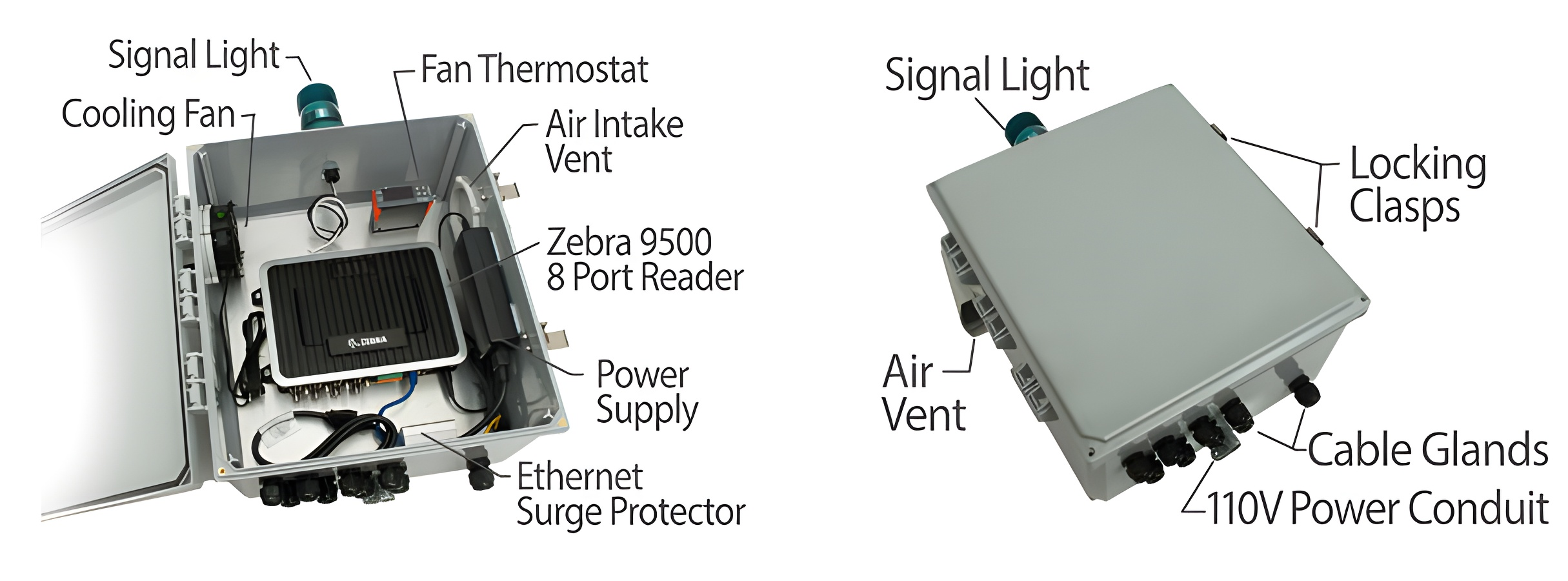
Accessories should be selected as part of the enclosure design, with the required environmental protection and equipment limits in mind.
Review usable space, mounting plate, reader fit, power equipment, cable bend clearance and access for service.
Discuss thermostat-controlled fans, ventilation or other suitable cooling approaches based on heat load, ambient temperature and the required rating.
Review Ethernet or PoE surge protection, equipment compatibility and the installation’s grounding requirements.
Select appropriate glands, bulkhead connectors and conduit fittings for RF, Ethernet and power connections.
Discuss cabinet-mounted or remotely mounted signal lights and optional sounders. Confirm daylight visibility, I/O and control requirements.
Review wall or pole mounting hardware, cabinet access, locking hardware and separate antenna-positioning requirements.
NEMA enclosure types describe protection against defined environmental conditions. Select the required type for the actual exposure, then confirm that the assembled cabinet and its accessories meet that requirement.
Review the equipment location, rainfall, airborne dust and any washdown exposure. Type 4 and Type 4X enclosures address defined dust and water-ingress conditions; Type 4X includes additional corrosion-resistance requirements.
Use the manufacturer’s specifications for the selected product rather than relying on “weatherproof” as a complete description.
Cable penetrations, vents, fans and fittings affect the completed enclosure. Use compatible accessories installed according to their instructions.
Plan internal temperature and condensation control separately from the cabinet’s ingress rating. A sealed cabinet does not automatically keep equipment cool.
Configure indicators around an agreed event, such as a valid read, a completed transaction or an exception. The application and reader I/O determine when the indicator activates.
Decide whether the light means any tag was detected or that all expected items passed the application’s checks.
Choose a visible mounting location and review remote wiring, power and optional audible feedback.
Test valid loads, missing items and unwanted reads so operators receive the intended feedback.
BarcodeFactory can work with your project or maintenance team to review the enclosure, mounting and supporting components.
| Project detail | What to provide |
|---|---|
| Reader & equipment | Reader model, power supply, antenna connections and any switches or I/O devices to be installed. |
| Site exposure | Indoor or outdoor location, temperature range, sunlight, dust, moisture, washdown and corrosion concerns. |
| Required protection | NEMA Type, IP rating or other documented project requirements. |
| Power & network | Available supply, PoE requirements, network connection and surge-protection needs. |
| Cable routing | RF connector types, cable lengths, entry locations and conduit or gland requirements. |
| Mounting & service | Wall or pole details, mounting height, access clearance and cabinet security. |
| Indicators & controls | Signal-light location, optional sounder and application events that should trigger feedback. |
It depends on the ordered configuration. Confirm whether the quote includes the reader, power supply, internal wiring, mounting hardware and accessories.
Cooling accessories must suit the cabinet, environmental conditions and required protection. Confirm the rating of the completed assembly after the fan and any openings are included.
Only if the application is configured to validate the expected items before activating the light. A general read indicator may mean that one or more tags were detected.
Wall and pole configurations can be reviewed. Provide the installation details so suitable brackets, attachment hardware and service clearance can be specified.
Send the reader model, site conditions, required rating and mounting details. Our team can help review an individual enclosure or a configuration for your larger RFID project.
From Fortune 500 companies to your small business, 125,000+ companies trust our products, service, and support.












Barcode Factory is a premier partner with the industry's leading hardware, media, and software providers. We give our customers access to proven products, services, and resources for labeling and data capture applications.
Shop by Brands





For more information or to discuss your project, Contact Us or call 888-237-8525.