


Direct Thermal vs Thermal Transfer.
Two thermal printing technologies. Two very different approaches to creating a barcode, label or image. Learn which method makes sense for your application.
Both Use Heat. The Way They Use It Is Different.
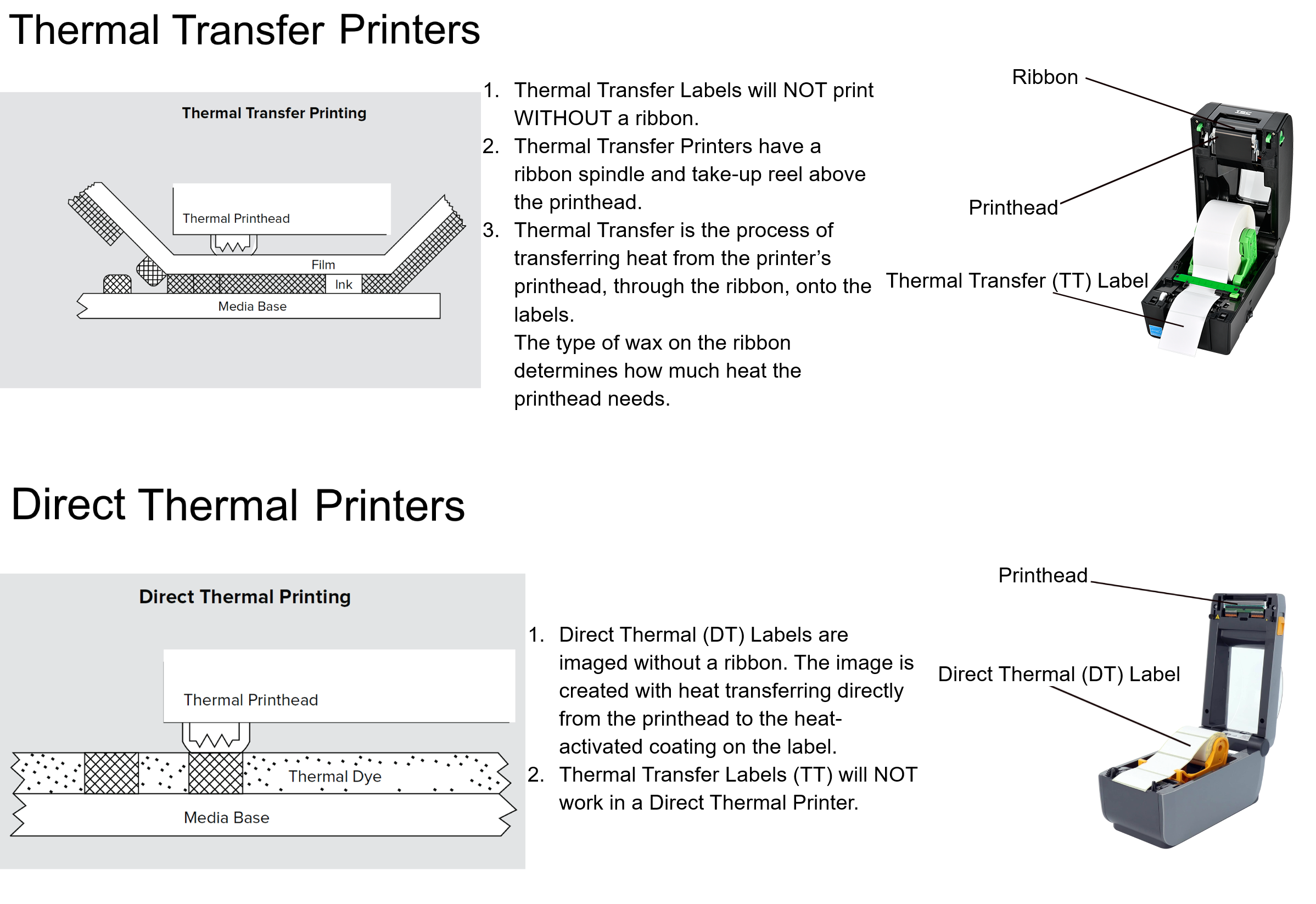
Direct thermal and thermal transfer printers both use a heated printhead to create an image. The key difference is where that heat is applied. Direct thermal printing creates an image directly on specially coated material, while thermal transfer printing uses heat to transfer ink from a ribbon onto the label, tag or other substrate.
Thermal Transfer
Print using a ribbon for durable, long-lasting images.
In thermal transfer printing, heat from the printhead passes through a thermal transfer ribbon and transfers the ribbon's coating onto the substrate.
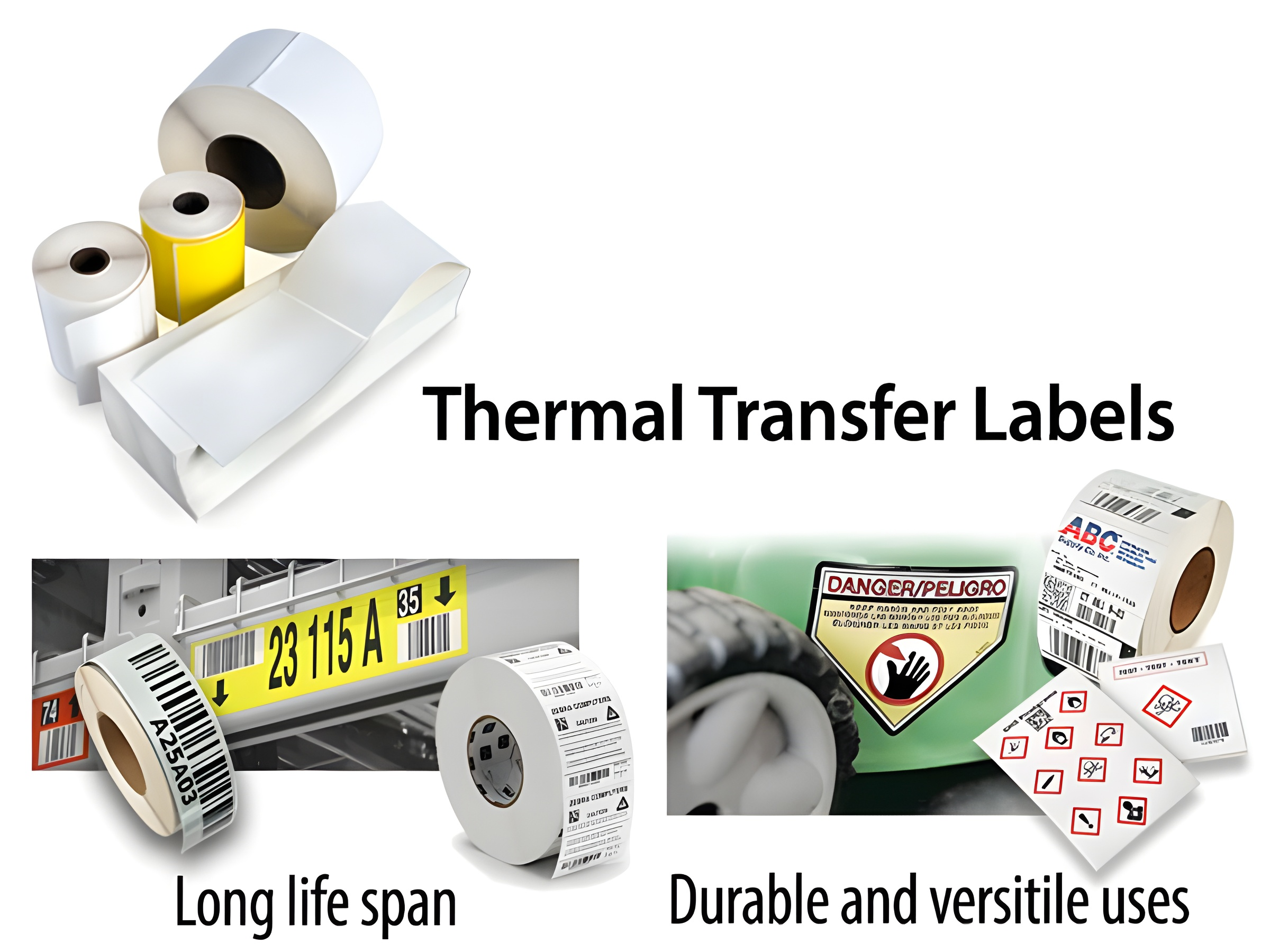
Paper, paper tags, synthetic labels and synthetic tags.
Shipping labels, asset marking, product identification and applications requiring durable printed images.
Advantages
- Long label life
- Wide variety of materials
- Excellent image durability
- Good UV and chemical resistance
Considerations
- Requires thermal transfer ribbon
- Ribbon replacement adds upkeep
Direct Thermal
Print directly onto heat-sensitive material without a ribbon.
In direct thermal printing, the heated printhead contacts specially coated material. The coating reacts to heat and creates the printed image.
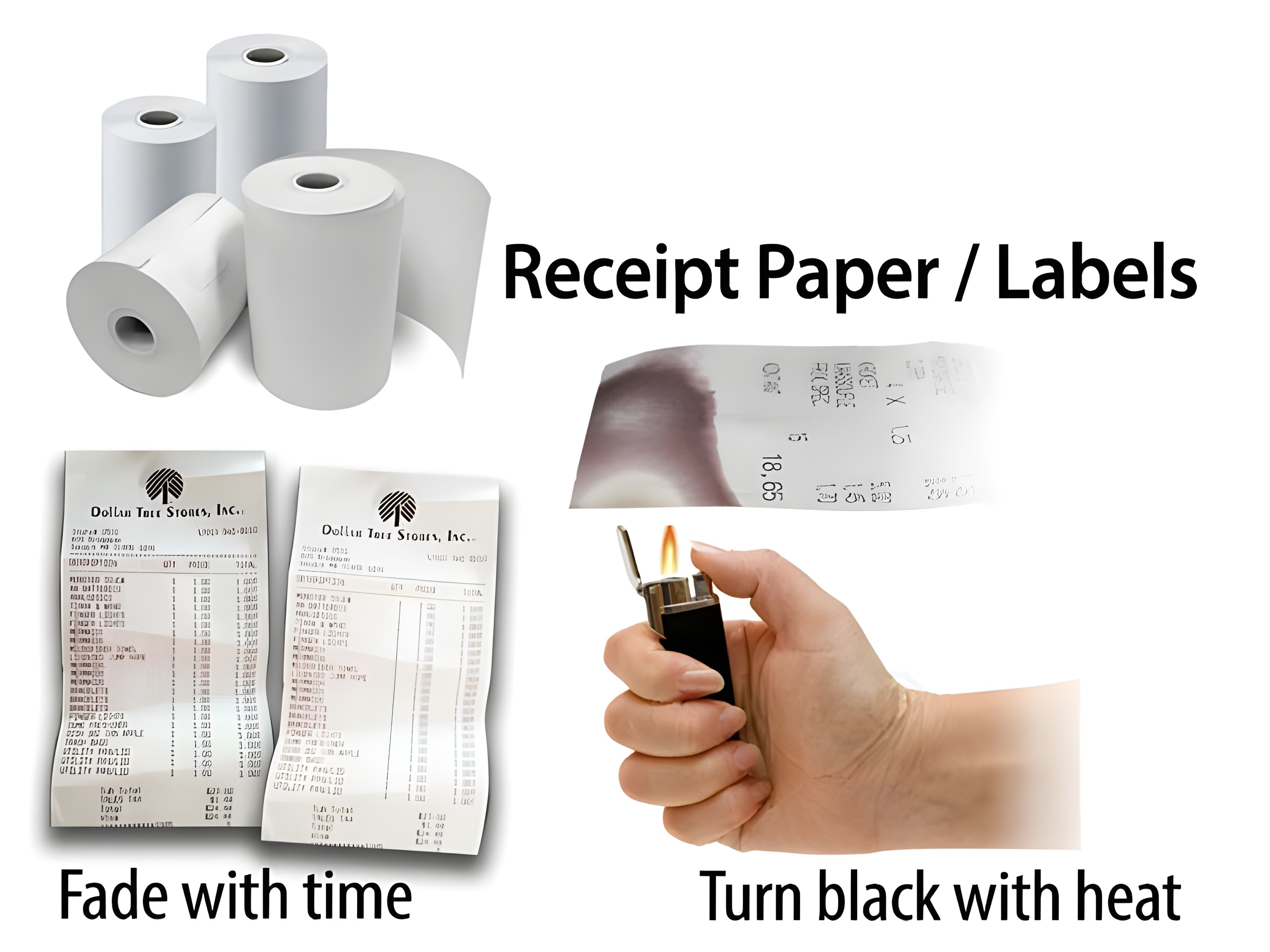
Paper, paper tags and selected synthetic materials.
Retail receipts, shipping labels, tickets, temporary identification and other applications where a ribbon is not required.
Advantages
- No ribbon required
- Simple printer operation
- Fewer consumables to manage
- Cost-effective for many applications
Considerations
- Limited print lifespan
- More susceptible to heat and UV exposure
- Less durable than thermal transfer
Thermal Transfer vs Direct Thermal
The right printing technology depends on how long the label needs to last, what conditions it will encounter and what material you're printing on.
Not All Ribbons Are Created Equal.
Thermal transfer ribbons are available in different formulations to match the substrate and durability requirements of the application.
Commonly used for general-purpose paper labels.
A balance of print quality, durability and versatility.
Designed for demanding applications and synthetic materials.
Which One Is Right for Your Application?
The best choice isn't simply about the printer. The label material, environment, expected lifespan and durability requirements all play a role. Barcode Factory can help evaluate your application and determine the right combination of printer, media and ribbon.
How Long Must It Last?
Temporary labels may work well with direct thermal, while long-term identification often benefits from thermal transfer.
What Will It Encounter?
Consider exposure to sunlight, heat, moisture, chemicals, abrasion and other environmental conditions.
What Are You Printing?
Paper, synthetic labels, tags and specialty substrates can all affect which printing technology is appropriate.
From Fortune 500 companies to your small business, 125,000+ companies trust our products, service, and support.









Not Sure Which Thermal Technology You Need?
Barcode Factory has helped customers develop labeling solutions for demanding applications across manufacturing, transportation, aviation, military and other industries. Our testing capabilities can help determine the right combination of adhesive, face stock, print technology and ribbon for your application.
Talk to a Labeling SpecialistFor more information or to discuss your project, Contact Us or call 888-237-8525.